How railways can turn existing telecoms cable into a network-wide sensing system
Walk along almost any modern main line and you'll pass a quiet, unassuming asset: the trackside cable route. Buried in troughs, ducts or directly in the ground, these routes carry fiber optic cables that support signalling, communications and operational data. What many rail operators don't realise is that some of the fibers inside those cables are sitting unused, and that this "dark fiber" could be one of the most valuable yet underutilised intelligence assets they already own.
What is dark fiber?
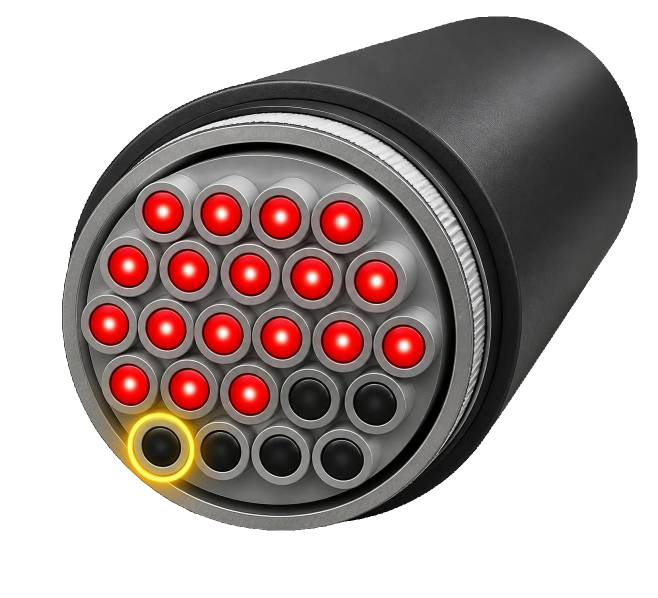
When fiber optic cables are installed, they're usually specified with far more capacity than is needed on day one. A single cable may contain dozens of individual fibers, with only a handful carrying live light traffic. The rest are left unlit, held in reserve for future expansion. These spare strands are known as dark fiber.
On many railways, lit and dark fiber runs continuously along rail routes, following the track closely and passing every bridge, cutting, tunnel and crossing along the way. That leaves the unused fibers ideally placed to do something beyond carrying data: Listening.
From communication cable to fiber sensor
Distributed Acoustic sensing (DAS) works by sending pulses of laser light down a single optical fiber. As the light travels, a tiny fraction is scattered back towards the source by natural imperfections in the glass. When vibrations or sound waves disturb the fiber, they subtly change this backscattered light. By analysing those changes, and measuring how long the light took to return, a DAS interrogator (sensing unit) can listen to both what is happening and pinpoint where it is happening too.
Learn more about how DAS works
TL;DR? The result of using DAS is that a single fiber behaves like thousands of virtual microphones spaced every few metres, stretching for tens of kilometres from one sensing unit. You can listen to a lot using very little.
Why using existing fiber makes sense
- Cost: The most obvious benefit is cost. Installing anything new along a railway is usually costly and disruptive, involving track possessions, trackside access, civils works and specialist labour. Repurposing a fiber that is already in the ground removes much of that expense and allows a sensing system to be deployed far more quickly.
- Coverage: Traditional trackside sensors monitor what’s happening at specific points, so gaps in coverage are inevitable. Fiber sensing in contrast provides continuous coverage along the entire fiber length, meaning events occurring between conventional detection points no longer go unnoticed. Each of our sensing units can measure up to 100km of fiber.
Point sensors leave gaps in protection
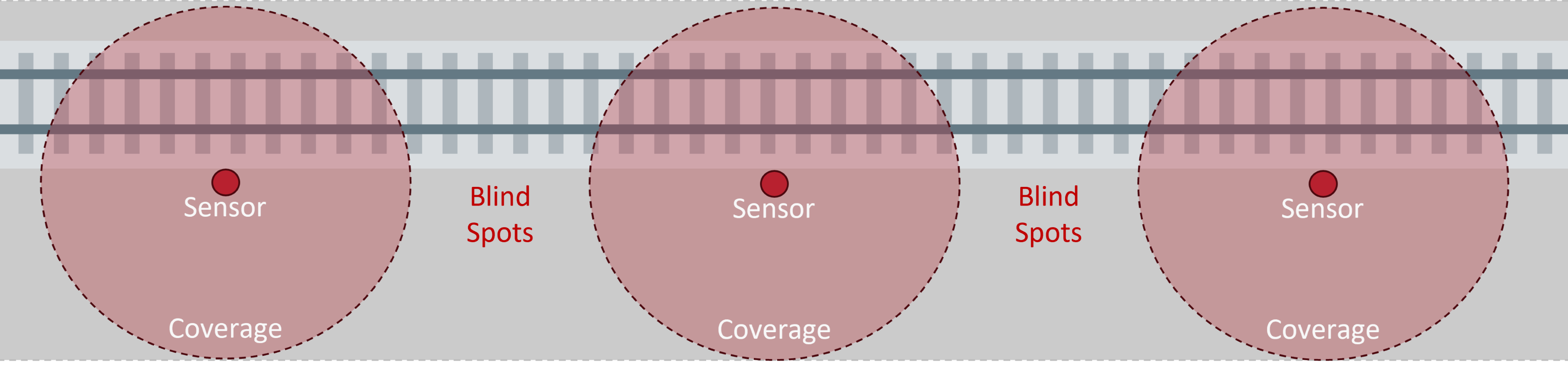
Fiber sensing gives gap-free capability

- Maintenance: Using fiber also means less lineside and on-track equipment therefore less maintenance too. As the sensing element is the fiber itself which has a lifetime measured in decades, there are no new sensor devices to install, maintain, power, protect and provide communications for. The fiber sensing device (known as an interrogator) typically sits in equipment rooms or lineside buildings, where it is easier to access, and secure.
- Sustainability: Making more use of an asset that already exists, rather than manufacturing and installing new trackside hardware, reduces material consumption and the carbon emissions associated with manufacture and installation.
- Safety: Last but certainly not least, fewer trackside interventions for installation and maintenance mean fewer 'boots on ballast' delivering improved safety for staff.
There is a lot to like about fiber sensing.
What can dark fiber detect?
DAS measures fiber vibration, so once connected, a trackside fiber supports a wide range of uses from events that generate ground borne vibrations. Common applications include security, natural hazards/ground movement, track condition monitoring and even secondary train tracking too.
Advanced signal processing, machine learning and AI are used to classify events, helping to distinguish a passing train from a digging excavator, a person from a cable thief or a catenary flashover from a landslide. Find out more below:
Natural Hazard Monitoring Security Monitoring Track Monitoring Catenary Flashover Location
Is every fiber suitable?
Several factors influence fiber sensing systems performance in addition to which supplier you chose (Obviously I'm going to say we are the best supplier).
Fiber, as it makes up the sensing element in DAS, is obviously a critical part of the sensing system. Using existing fiber is often an attractive start point, and a successful deployment depends on understanding both the fiber and its route. DAS measurement systems from Sensonic work with the standard single-mode fiber already common in rail telecoms and signalling networks (e.g. G.652, G.654, G.655 or G.657 fibers). No special sensing cable is needed, just a spare unlit fiber and a connection point to it.
Where the fiber is located in relation to the event/vibration source you wish to monitor is vital. The distance from the track (or asset of interest), affects how strongly vibration signals are received by the fiber.
How the cable is installed matters too. The fiber needs to be coupled to its surroundings to pick up vibrations clearly. A cable buried directly in the ground (the ideal situation) behaves differently to one suspended from electrification masts or hangers in a tunnel (where you get poor vibration coupling). Fiber laid in trackside ground level cable troughs is common across many railways and gives good performance.
The condition of the fiber is important too. Poor-quality splices, dirty connectors or damaged sections increase signal loss and reduce sensing range. A fiber survey, typically using Optical Time-Domain Reflectometry (OTDR), helps establish whether a fiber is suitable and where any issues lie.
There are also practical requirements too. A dark fiber needs to be allocated for dedicated sensing use rather than assigned to communications traffic, with access agreed with the network owner or telecoms team responsible for it. Railways typically desire accurate geolocation for any alerts/data generated. Calibration of fiber distance to location typically requires site access during project commissioning to optimise location accuracy. This one-off process quantifies the length and locations of maintenance loops in the fiber, so that fiber distance and ground location can be accurately calibrated, so alerts can be geolocated to +/- 10m.
A practical path to smarter railways
For many operators, the question should not be whether they can afford to install a new monitoring system, but whether they can afford to leave an existing infrastructure information asset idle and untapped. Dark fiber offers a route to network-wide awareness that builds on infrastructure already in place, without the cost and disruption of large-scale trackside works.
At Sensonic, we help rail operators answer difficult infrastructure monitoring challenges. We can assess their existing fiber, identify where sensing will deliver the greatest value, and deploy systems that turn capacity into capability and actionable insight.
Want to hear about your trackside fiber doing more?