As climate change continues, a "once-in-a-generation" storm or extreme weather event seems to become a seasonal reality.
For railway infrastructure managers and maintainers, extreme weather isn’t just an operational headache, it is a direct threat to the structural integrity of the network and the safety of its staff and passengers. From torrential rains triggering embankments to slide, to high winds toppling trees across tracks, the challenge of maintaining a safe, resilient railway through more energetic weather has never been greater.
The Vulnerability of the Linear Railway Asset
Railways are vast, linear assets. A landslide in a remote cutting or a washout under a blocked culvert can happen almost anywhere along hundreds or even thousands of kilometres of track.
The solution is to fit more sensors?Right?
No
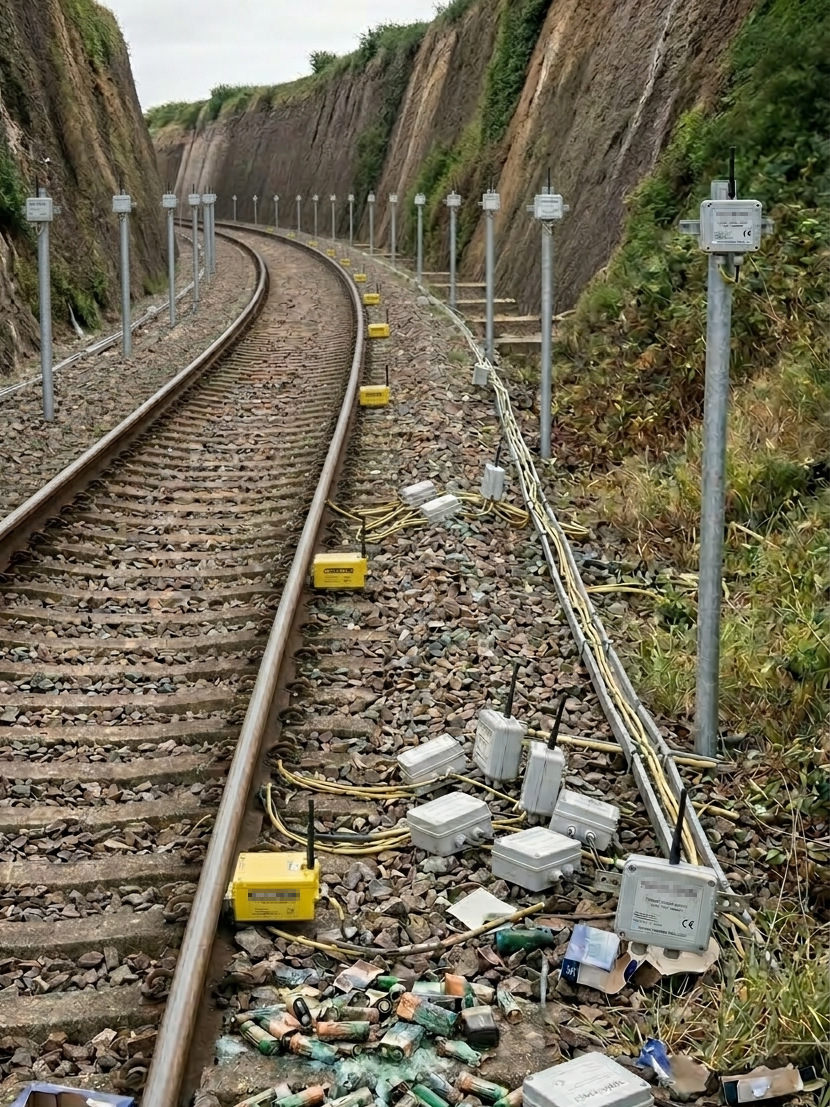
Adding more sensors to shrink the gaps in protection between them creates many other headaches, huge costs, and a mountain of maintenance too. So protecting entire routes comprehensively this way just isn’t practical or economical.
To truly weather the unavoidable weather resilience storm, the industry needs more comprehensive Continuous Infrastructure Intelligence to assess the whole route, not just specific locations but without busting budgets. This capability can be realised through Distributed Acoustic Sensing (DAS) which uses fiber optic technology to sense events spanning entire rail routes. By utilising fiber optic cables buried alongside the track, it is possible to turn the entire fiber route into a continuous, linear sensor array delivering data 24/7. This allows us to digitally listen to the vibrations of the earth and the track, providing complete route coverage that doesn't shy away from service when the clouds roll in.
1. Landslides and Mudslides: Detecting the Descent
When saturated soil loses its grip on a hillside, staff, passengers, freight and rolling stock assets are all put at risk. Every second counts when a train is speeding towards blocked track. DAS detects the characteristic ground vibrations of earth movements in real-time, sounding an alert within seconds of an earthwork or structure failure. The monitoring technology allows us to pinpoint the exact location of a slip, allowing operations teams to advise or halt trains immediately as appropriate. This both improves rail safety but also limits the necessity for blanket slow orders / speed limits and track proving runs during or after extreme weather events, minimising their impact where assets have remained resilient.
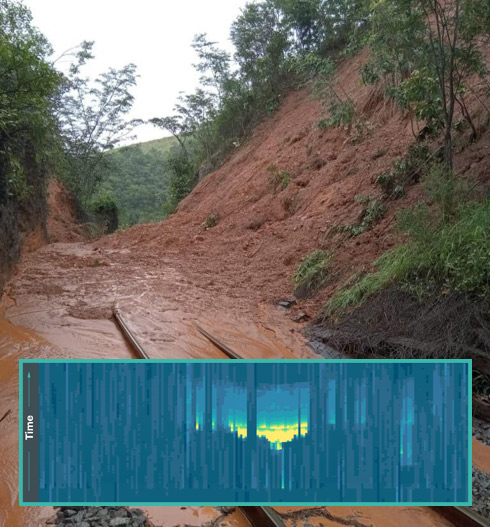 Landslide/Mudslide and associated detection via fiber optic sensing
2. Rockfall: Real-Time Rock Impact Alerts
In mountainous, rocky or steep valley terrain, a single boulder blocking the track can be as catastrophic as a major landslide. DAS is sensitive enough to identify the specific thud of a rock tumbling down the slope and impacting the track bed. Unlike visual systems that can be obscured by mist, fog, heavy rain, snow or even darkness, acoustic sensing remains effective in all visibility conditions. Once again accurate location of events can be used to minimise delays direct response teams directly to the incident site to restore the railway to operation.
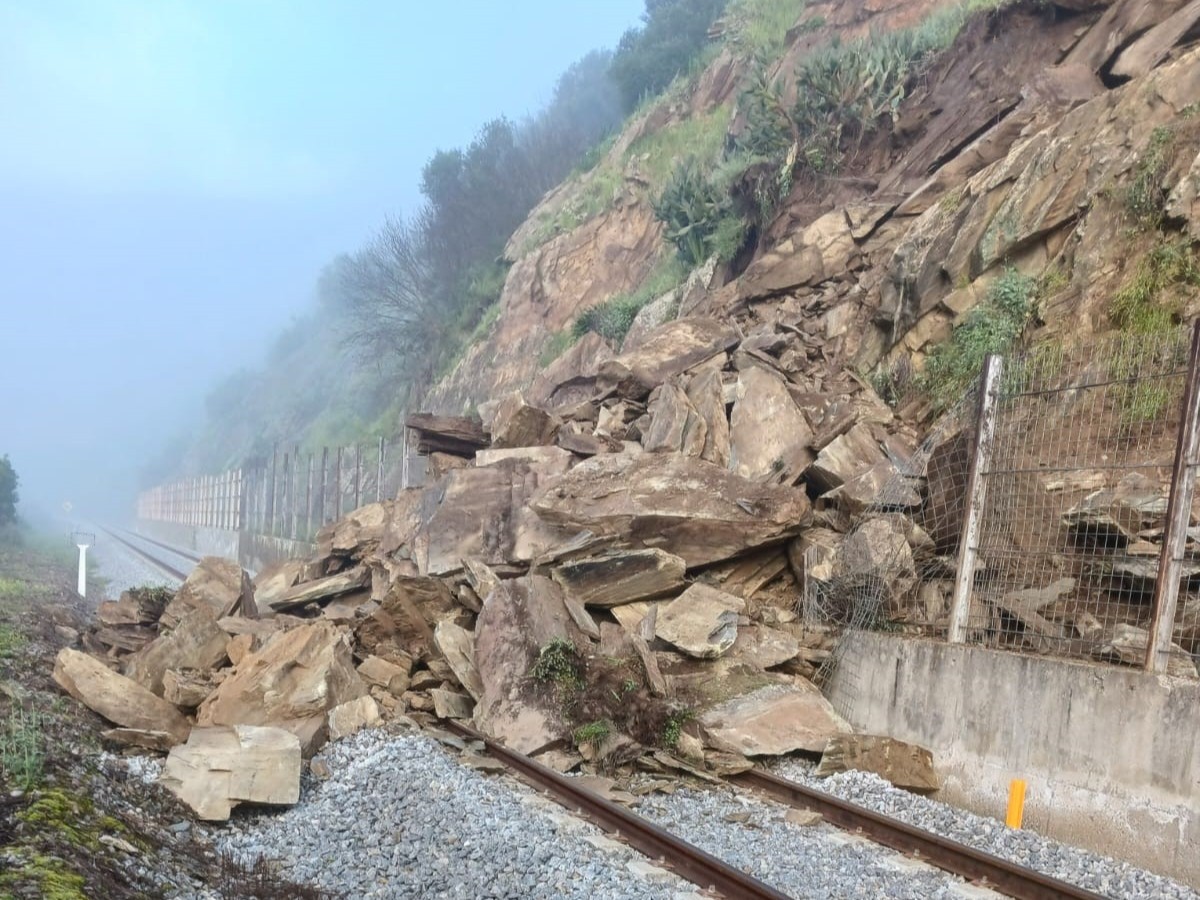 Rockfall detected by fiber optic sensing (Click for case study)
3. Treefall: Tagging Toppled Timber
High winds from storms and squalls bring the risk of trees falling across the permanent way and damaging overhead line equipment (OLE) where installed. This puts people and operations at risk of injury and damage.
The thought experiment asks, “If a tree falls in a forest and no one is around to hear it, does it make a sound?”. We can potentially answer it with a simple solution. We make sure fiber and our algorithms are always listening!
When a tree hits the ground or the infrastructure, it sends a vibration through the ground/track and into the fiber. By listening for and locating these strikes, we can warn traffic of potentially obstructed track and dispatch maintenance crews directly to the affected site(s), drastically reducing both track clearance and route proving requirements. This application is under development, so if you’d like to be the first to realise it then get in touch.
Treefall detection demonstration and data gathering
4. Washouts: Breaching the Ballast
Another insidious weather threat is the washout, where either fast-flowing, or the heavy weight of water compromises the foundation of the railway, eroding ballast and sub-structure from beneath the rails. This can leave the track looking normal from a distance to the driver, whilst rails are hanging suspended in mid-air.
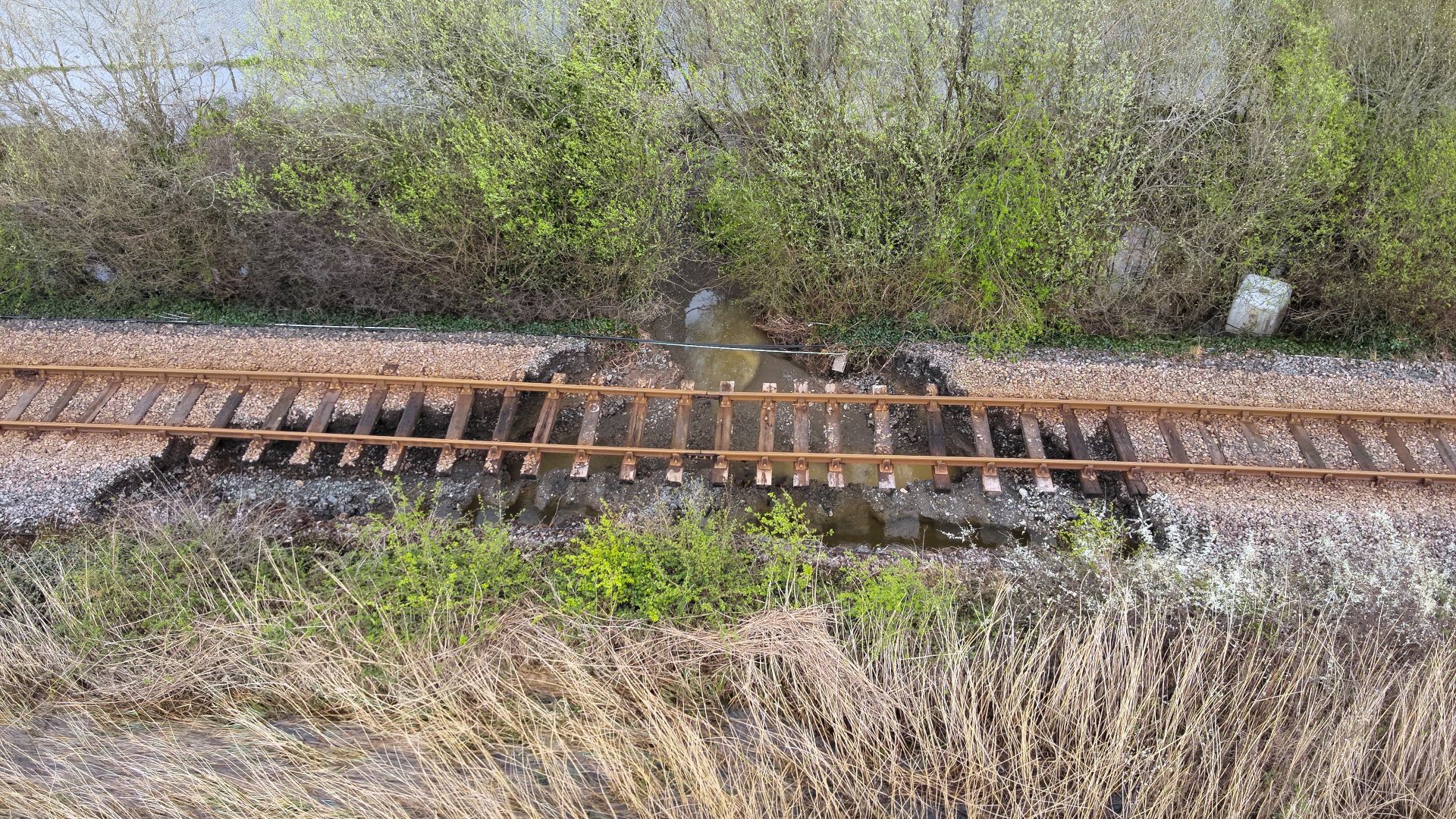 Flood damaged tracks - Image courtesy
 DAS can detect the sudden shifting of supporting ballast as the water compromises track structure. This sonic signature can be used to trigger speed limits, track inspections or even remote drone assessments, protecting passengers from harm and hazardous freight from spillage into the scenery. It can work in a rail environment, could it work for you too?
Washout demonstration and data gathering
Submersible surveillance: No drowned detectors
The greatest advantage of using fiber optic sensing to monitor the weathers attack on rail infrastructure, is its own weather resilience. Traditional sensors often rely on batteries that die in the cold and radio signals that fade in heavy rain and electronics that can fail during submersion in flood waters. They may often also require physical reset or replacement after activation, requiring technicians to go to site and step onto track for maintenance, a potentially hazardous task during or after a storm.
Fiber optic sensing in contrast requires zero trackside electronics. The sensing element is a passive glass fiber safely situated below ground. The same technology is used to monitor under-sea cables so a little, or even a lot of water, does not prevent it working. DAS detection requires no site situated batteries, no solar panels nor any radio antenna. As long as the fiber remains intact, no on-site maintenance or resets are required, and multiple events can be detected both concurrently and consecutively.
Conclusion: Realising Resilient Rail
We cannot control the weather (Yet!), and infrastructure reinforcement projects take time, but we can control how we respond to weather events now. By closing the blind spots in our infrastructure intelligence and moving to Continuous Infrastructure Monitoring, we enable smarter resilience and operations decisions.
Extreme weather events will continue. We must get smarter at minimising their impact on railways together with improving the time to recover services to normal. Moving from being blindsided by weather hazards to hunting them down as they happen enables this crucial resilience transition.
Using fiber optic sensing technology, your network can listen attentively and be alert to natural hazards, whatever the weather!
Is your network ready for the next storm?
Speak to our Sensonic team today to learn how to turn your fiber assets into storm safety shields.