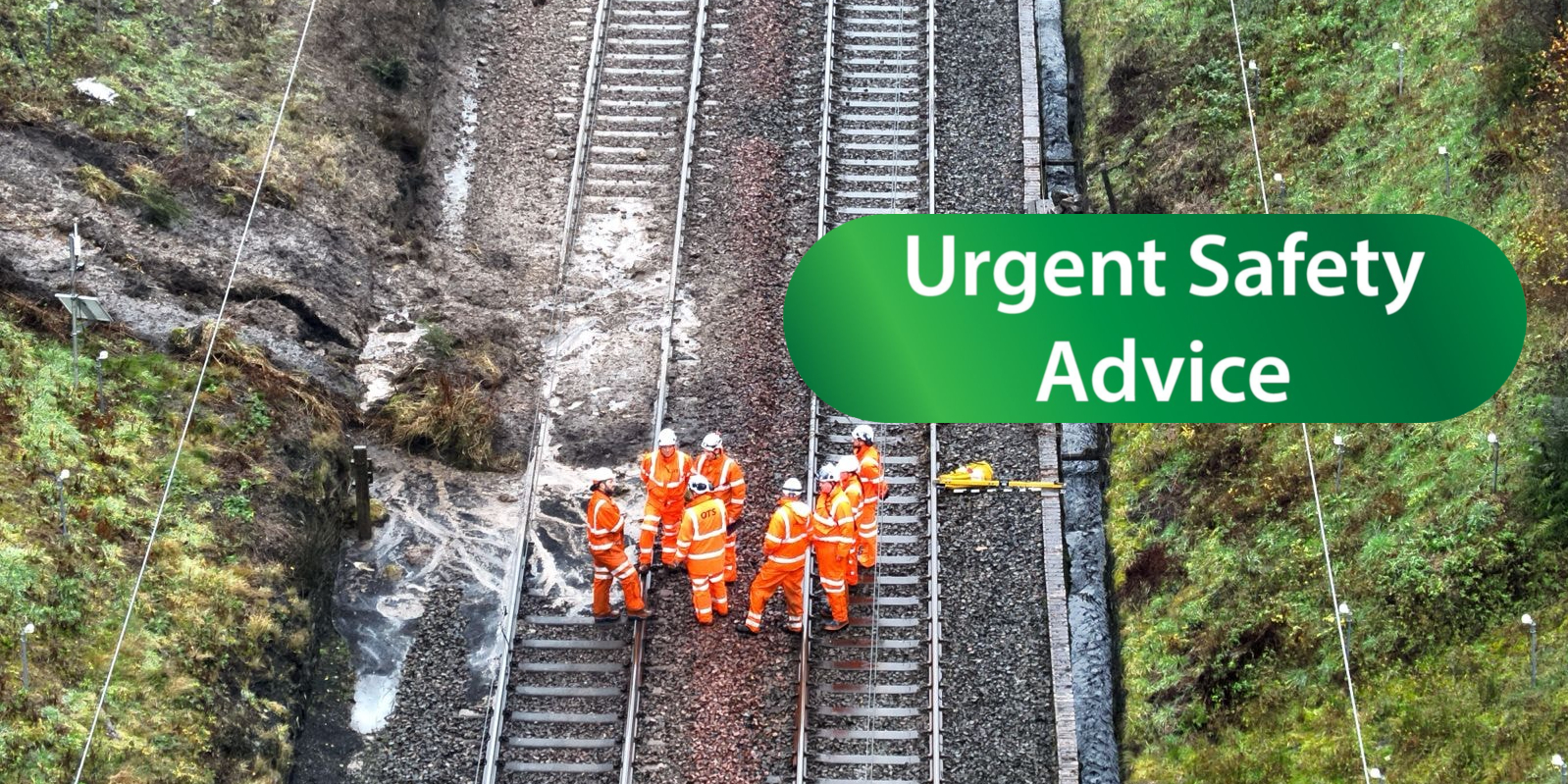
In the race to modernise our railways, the industry has reached a crossing point. As extreme weather events become more frequent and security threats build, the pressure to "monitor more" has never been greater. However, this brings a looming crisis few are talking about:
The Maintenance Mountain.
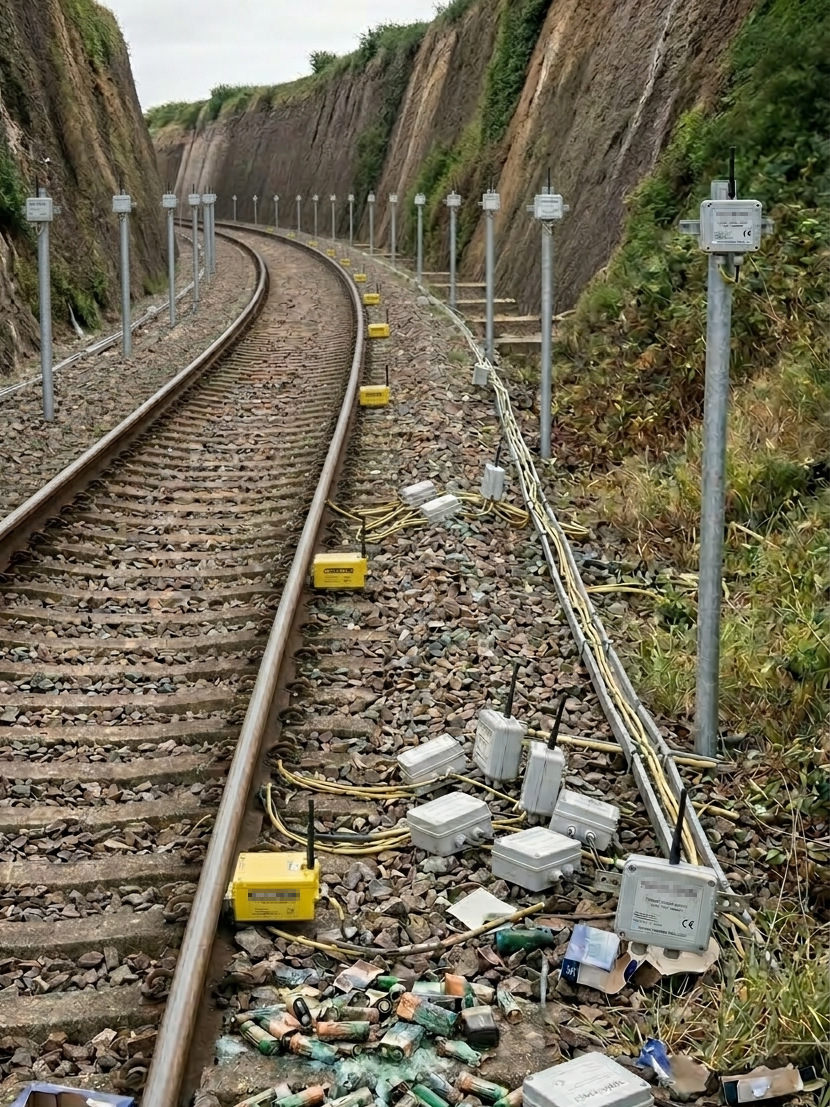
If we address every new safety and security risk by planting another forest of sensors, we aren't just protecting the track now, we’re building a future maintenance time bomb.
The Problem: Planting "Forests" of Sensors
Traditional monitoring relies on discrete "point" sensors. Whether it is a tiltmeter for landslides, a camera for trespass, or a tamper switch for cable theft, each device brings with it a hidden tax. To monitor a significant (multi-mile/kilometre) stretch of track effectively, you must install hundreds, if not thousands, of individual sensing units.
Three critical challenges:
- The Maintenance Mountain:
Almost every one of those sensors has a battery that will die, with many also requiring cleaning or calibration to remain correct. For a railway, this means an increasing and recurring burden of track access, safety briefings, and manual interventions in often hard-to-reach locations. - Littered Lineside:
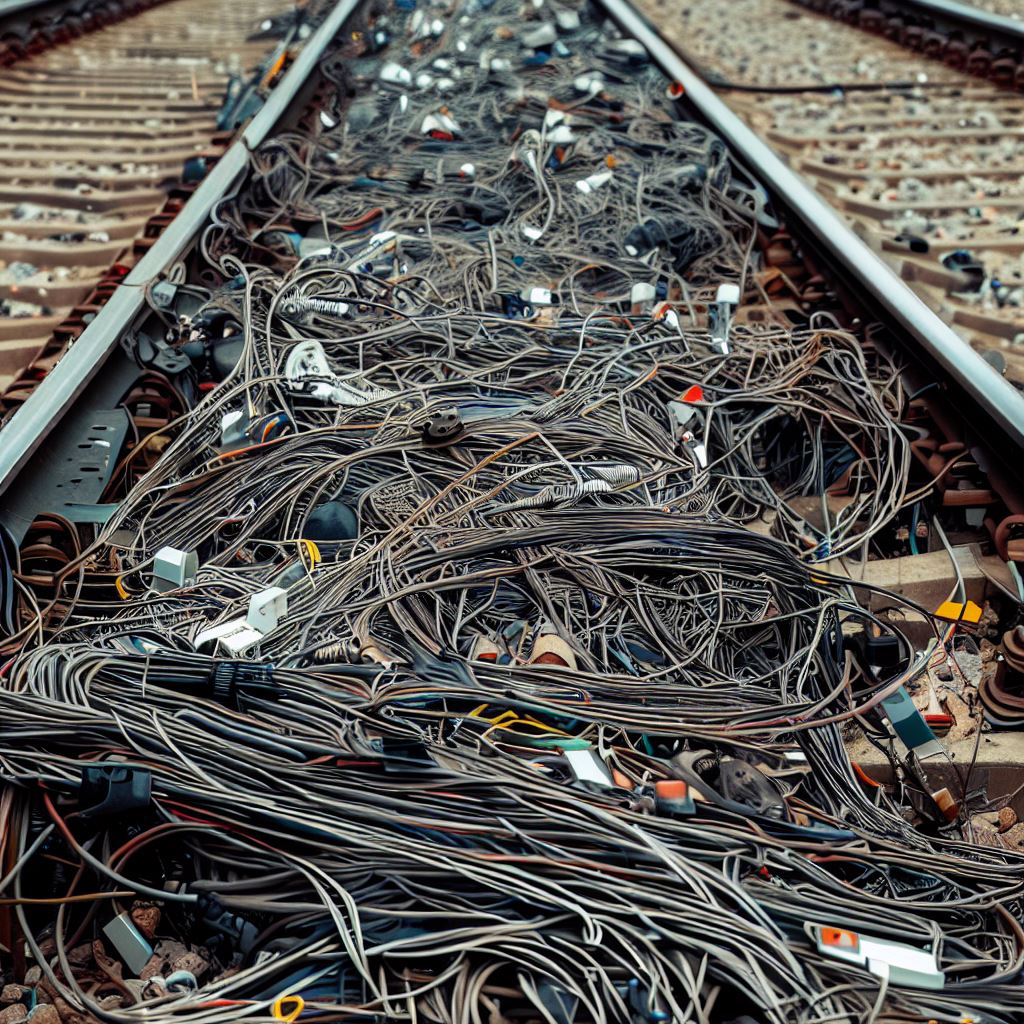
"Planting" more and more sensors and electronics trackside creates a cluttered environment that is more susceptible to vandalism, theft and accidental damage from weather or even routine maintenance works. - Porous Protection:
No matter how many discrete point sensors you plant, there are always gaps between then. A landslide doesn't care if it happens just to the left of your tilt sensor, and a cable theft doesn’t disrupt any less concealed behind your CCTV camera but your customers do. Closing the gaps by installing more point sensors costs and compounds the two issues above.
The Solution: Distributed Acoustic Sensing (DAS)
An alternative enabling a move from a "patchwork" of information points to a continuous "network" of awareness is Distributed Acoustic Sensing (DAS). DAS allows information, and crucially protection, to be scaled to entire routes without adding a single piece of electronic hardware trackside.
Yes, that's right – No new trackside sensors to plant, power and maintain.
By connecting a single sensing unit (Interrogator) to existing trackside fiber optic cables, we can transform the entire fiber route into a live, vibration sensing network. This is "scaling" in the truest sense.
Find out how Distributed Acoustic Sensing (DAS) works here
(TL/DR, DAS turns an optical fiber into thousands of vibration sensing elements listening across tens of kilometres.)
Scaling Without Burden
With DAS technology, the ability to listen to entire rail routes remotely, continuously and contiguously opens a monitoring data treasure-trove. Using the same fiber you can detect and accurately find; rockfalls in remote regions, trespass and cable theft, locate electrical flashovers and more, all from the same sensing data source. The device that does all the listening typically sits in a signalling or server room with safe, secure access keeping the lineside clear and clutter-free.
Move from maintenance mountain to molehill
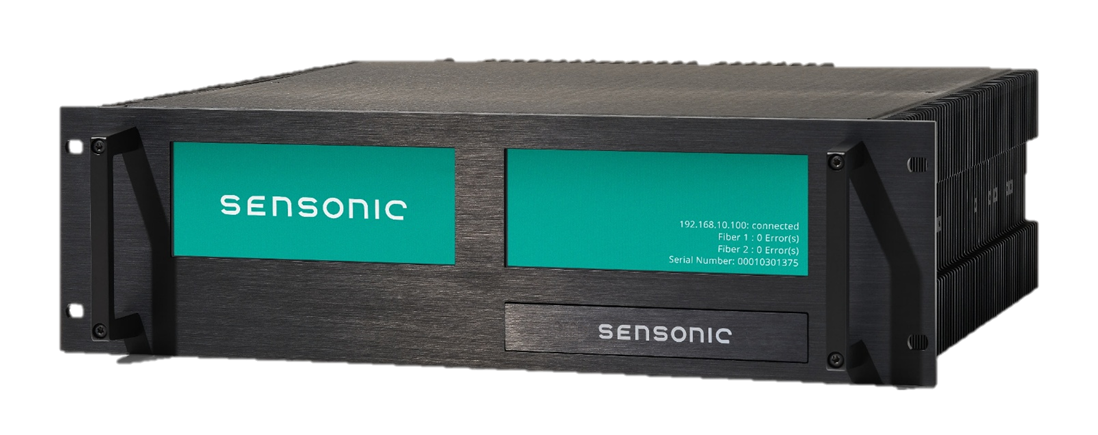
Sensonic Distributed Acoustic Sensing unit (Interrogator) Using existing fiber infrastructure delivers no new maintenance headaches. Even if new fiber is fitted the impact is minimal. Fiber is a well understood infrastructure with minimal maintenance requirements. New sensing hardware to unlock fiber sensing capability is low in number (as few as 1 per 80km of rail route) and the sensing devices are typically co-located with signalling or communications hardware outside the rail corridor easing both access and security concerns.
Sidestep sensor-soaked rail routes
With a single fiber providing infrastructure information spanning security, natural hazards, track condition and more, a more minimalist lineside is within reach. This simple cybersecure source of multiple infrastructure insights allows a rich baseline of asset information from an already often essential part of railway infrastructure.
Bridge infra-intel gaps without busting budgets
Using a continuous fiber as a sensing element gives gapless monitoring capability ensuring no blind spots. Instead of traditional discrete data points you gain a continuous line of insight along your rail route. The long-range monitoring provided by each sensing unit delivers class leading costs per kilometre.
Pruning infrastructure to encourage healthy growth
A goal for railways should be a “decluttered yet digital” trackside. A railway where real-time intelligence is centralised in secure locations through secure communications. It simply makes sense to use the sensing abilities supported by the very cables we already use for communication.
By using the economy of scale inherent in fiber optic sensing, we can provide gapless, 24/7 protection against both nature and intruders. Most importantly, we can do it without leaving a legacy of thousands of dying batteries and broken sensors for the next generation of engineers to climb.
We don’t need more sensors; we need more sense.
Let’s stop building maintenance mountains and start listening to the network we already have.