Smarter Sensing Technology
Imagine turning an ordinary, fine fiber of glass, the kind already running underground to provide high-speed internet, into a massive, continuous microphone, thermometer or strain gauge array. That is what distributed fiber optic sensing does. It allows you to measure various parameters (vibration, temperature, strain), along the entire fiber without the need for any extra sensors.
By plugging a specialised laser device (called an interrogator) into one end of a fiber optic cable, the entire length of that cable transforms into a smart sensor array of thousands of sensing elements. The laser device shoots pulses of light down the cable and listens to how that light bounces back from within the fiber along its length.
Because the technology allows us to see how the fiber is affected by its surroundings, companies, including us at Sensonic, use this technology to constantly listen to the changing environment of the fiber along long distances. This can tell is important information like train and car movements, people trespassing where they shouldn't be, illegal digging, stealing cables or even natural hazards such as landslides and rockfalls. Other applications of fiber optic sensing include earthquake, temperature and structural health monitoring, monitoring oil wells and pipelines, securing international borders, and protecting deep-sea power and communication cables.
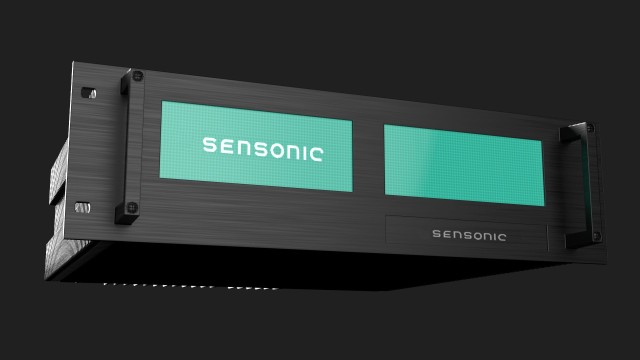 A fiber optic interrogator (sensing) unit from Sensonic
The Best Bits of Fiber Optic Sensing?
- It has long range capability making it highly cost efficient
- There are no gaps between sensors
- The fiber has a long life and is effectively maintenance-free
- No power requirements to monitor remote locations / battery free
- It doesn't cause and isn't affected by electromagnetic interference
A single monitored fiber can span over 30 miles (50 km) long or more. Because fiber optic sensing monitors every single centimetre of that distance without needing thousands of separate devices, it can be incredibly cost-effective.
A further cost saving strength is that companies can often plug into "dark" (unused) fiber cables that are already installed to reduce costs and speed project progress too.
How Does Fiber Optic Sensing Work?
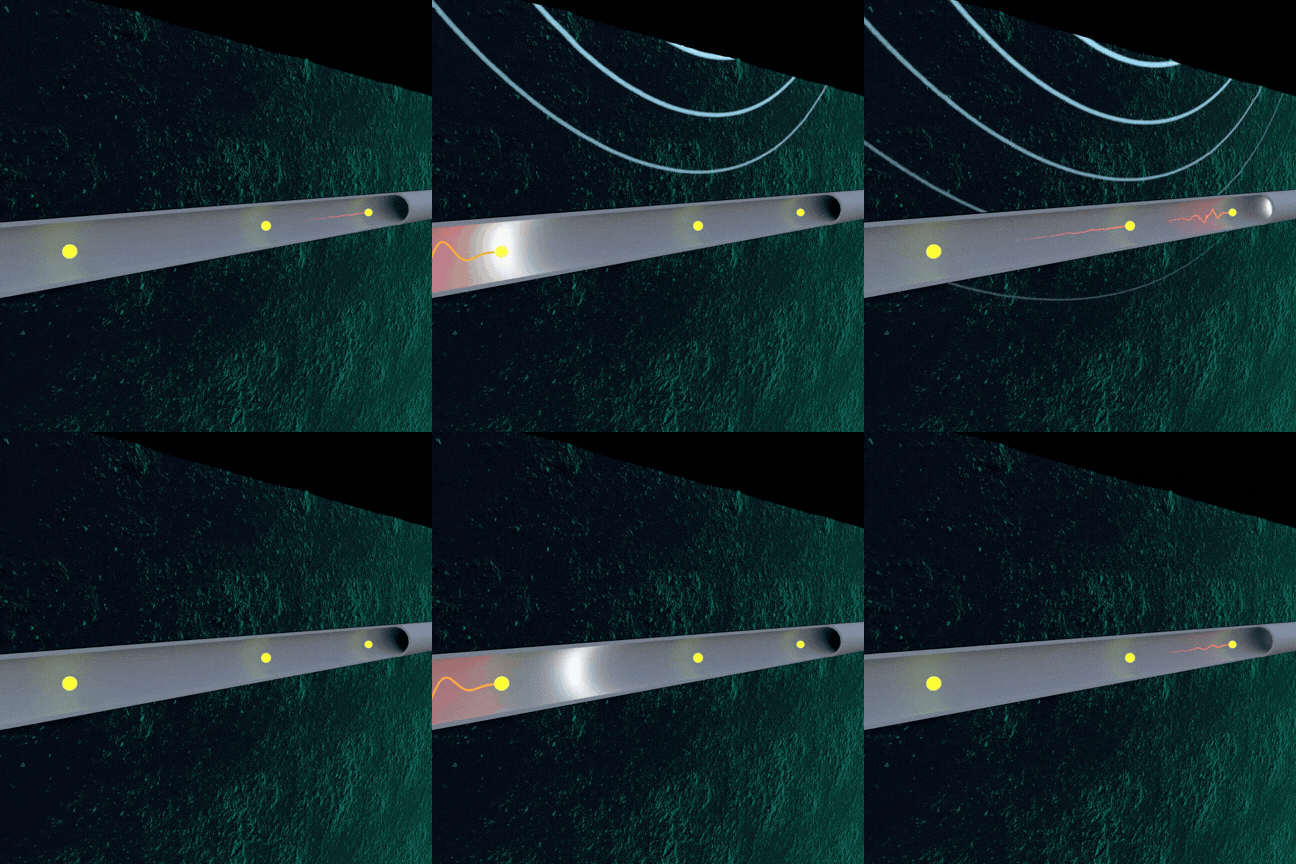
When light travels through a glass fiber optic cable, a tiny, natural amount of that light bounces back to the source, a bit like an echo. The reflections are from minute variations in the glass fiber structure along its entire length.
This reflected light echo (known as back scattered light) is affected and distorted by the environment around the fiber. Is it hot, is it moving, is it under tension etc. All these factors affect the reflected light. If something happens near the cable, e.g., a footstep, a shovel digging, or a change in temperature, it creates a tiny deflection or stretch in the glass. This microscopic disturbance is invisible to the human eye but alters the "echo" of the light traveling inside it.
The device at the end of the fiber measures that change in the back scattered light pulse. Because light travels through the fiber at a known speed, the system doesn't just tell you what is happening in real-time, it can also pinpoint the exact location of what is happening too.
What can Fiber Optic Sensing Monitor?
I go into more detail in a separate article here, but in summary there are 5 main types of fiber optic sensing.
-
Distributed Acoustic Sensing (DAS) - This monitors vibrations of the fiber gathering vibration frequency, amplitude and location information along its length
-
Distributed Strain Sensing (DSS) - This monitors changing strain of the fiber gathering strain and location information along the fiber length
-
Distributed Temperature Sensing (DTS) - This monitors temperature changes of the fiber along its length
- Distributed Strain and Temperature Sensing (DSTS / DTSS) - This monitors temperature and strain in a single fiber
- Fiber Bragg Grating (FBG) - This uses engineered reflection locations in the fiber to create a sensor point at a known location along the fiber
The first 4 types of fiber optic sensing are "distributed" sensing technologies, i.e. the whole fiber is used as an array of sensors distributed along its length. The last category creates one or more sensors in discrete locations along the fiber by engineering reflection sites into the fiber.
Many manufacturers and suppliers may have different names / nomenclature, but I'm sticking with the terminology the Fiber Optic Sensing Association uses to try to avoid confusion.
Sensonic specialise in DAS technology and its application in the railway sector.