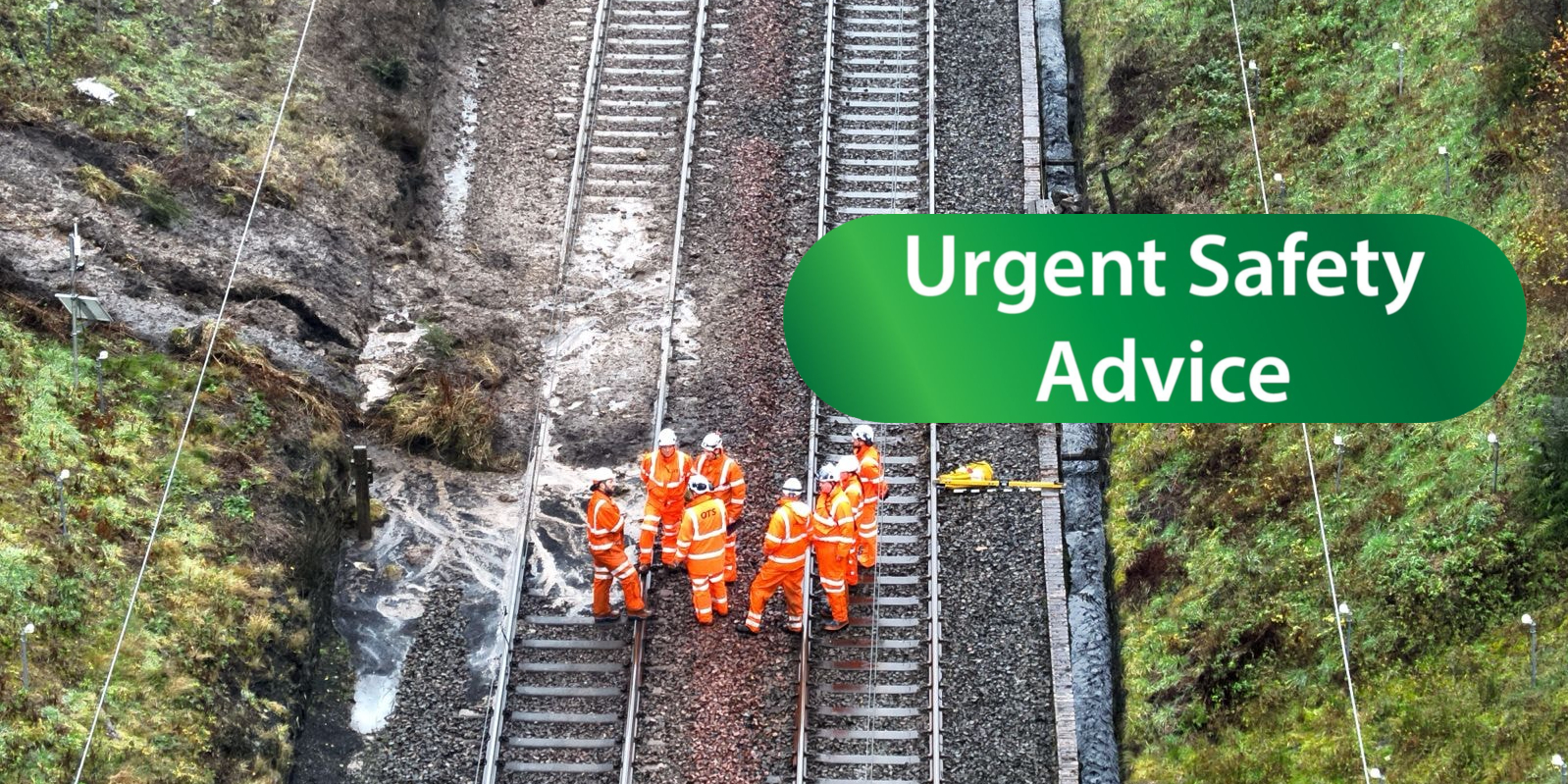
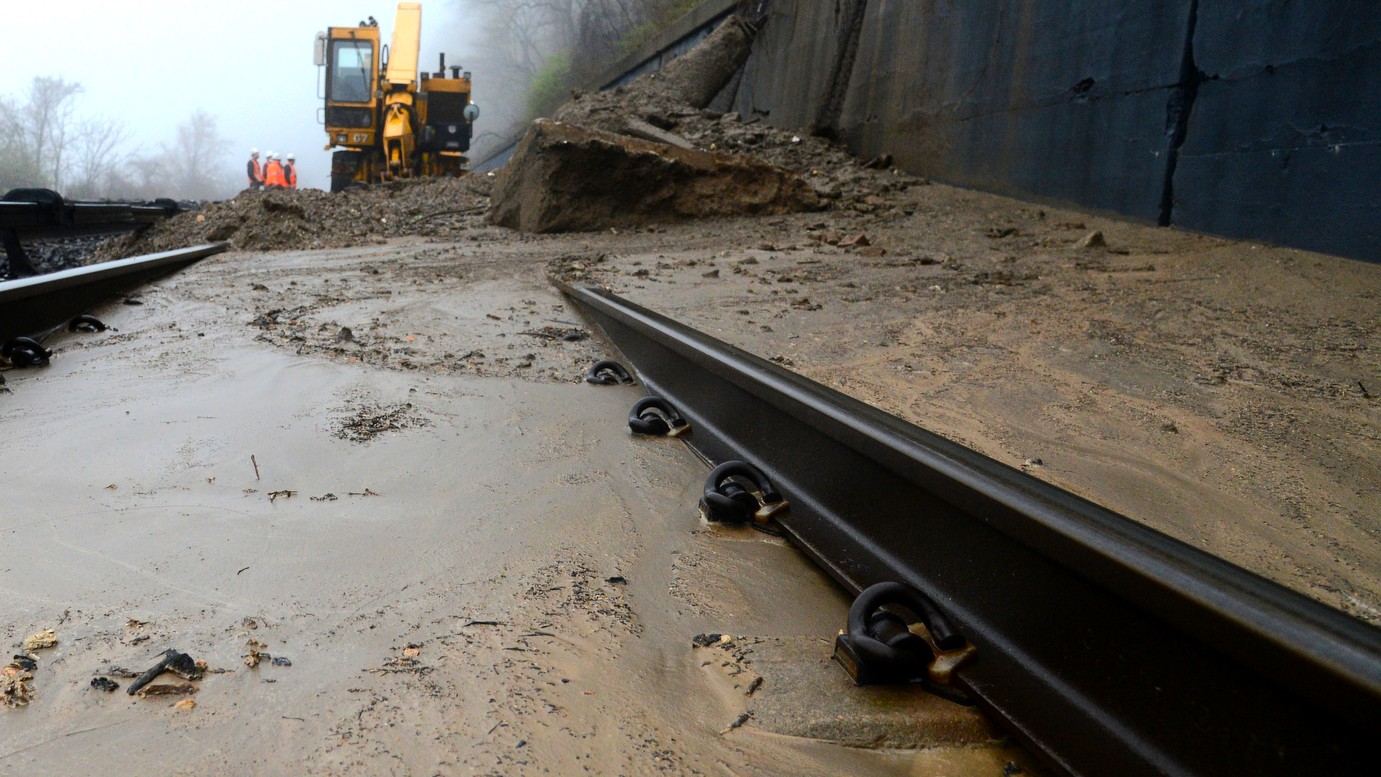
The images from the November 2025 Shap derailment in Cumbria, UK, served as a sobering reminder of the power of nature. At Shap, a passenger train traveling at 83 mph struck debris from a landslip triggered by intense rainfall. While we are fortunate there were no fatalities, the incident exposed a systemic vulnerability in how the industry monitors earthworks. Crucially, this failure occurred on a slope that was already "monitored."
In the aftermath of this and similar incidents, investigators and operators are asking the same question: How do we prevent a repeat?
While the answer is multifaceted, one factor is clear: The Economics of coverage.
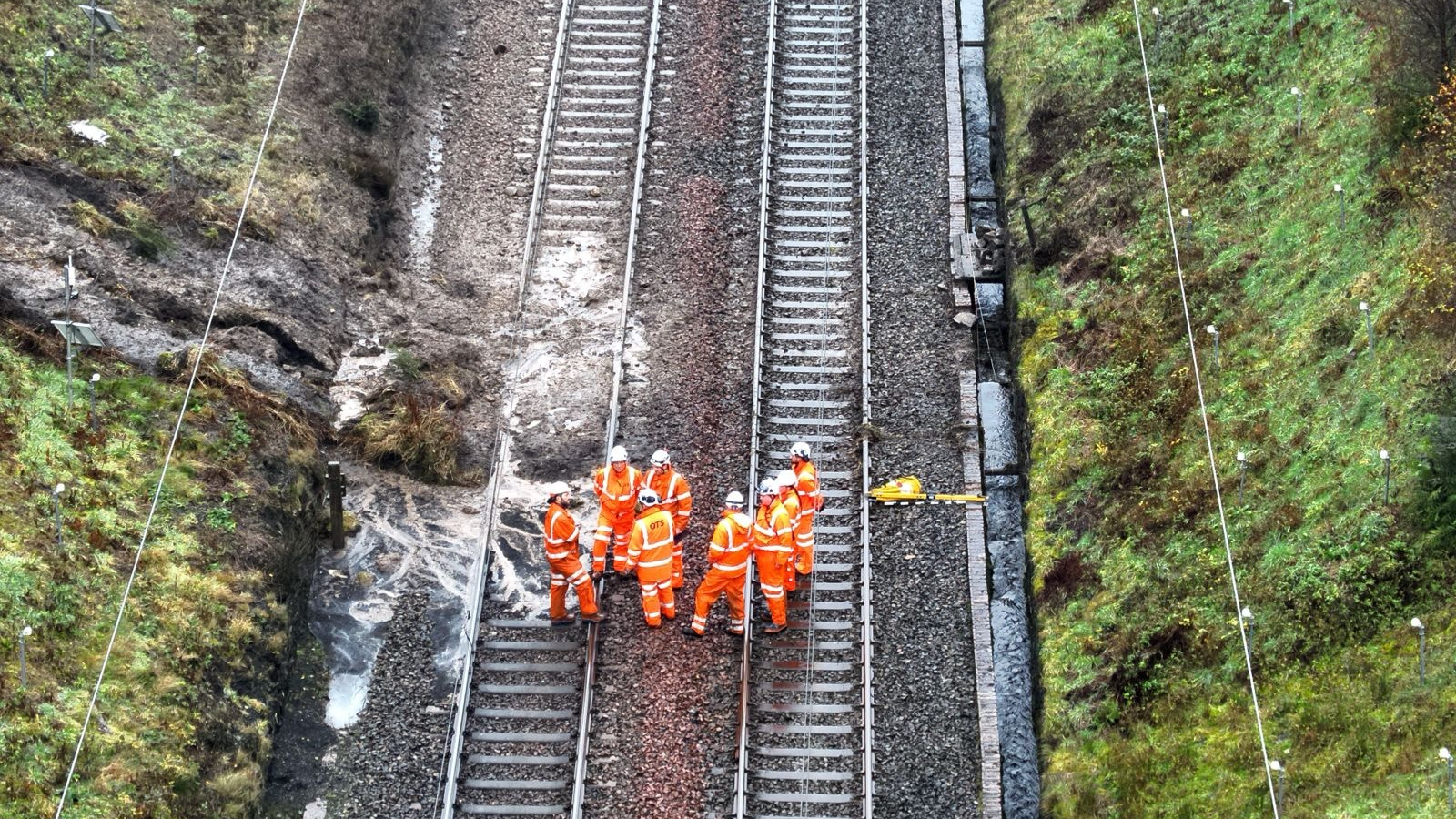 Shap landside that caused derailment. Image from Network Rail.
Note significant number of slope sensors present.
The Point Sensor Paradox
For years, the gold standard for slope stability has been "Point Sensors"—tiltmeters, pole sensors, and cameras placed at specific, high-risk locations. These devices are excellent at what they do, but they suffer from an inherent flaw we call the Point Sensor Paradox: A sensor can only tell you what is happening exactly where it sits. A centimetre behind – we are blind.
To protect miles of remote track against unpredictable landslides, you need thousands of these units to ensure a failure doesn't occur in the "blind spots" between them. The costs of attempting total coverage this way are simply staggering:
- CAPEX:
Thousands of individual devices are required. In high-risk areas, a density of one sensor per route meter is not unknown. - OPEX:
Operators face a future "maintenance mountain" of thousands of batteries that must be replaced in hard-to-reach, often unstable locations. - Logistics:
The need for localised solar power and wireless gateways in deep cuttings—where power and comms are most challenging—adds immense complexity to already unstable slopes.
At Shap, the landslide found the "gaps" in traditional sensing capability. The RAIB has since provided industry advice on these shortcomings, which you can read in detail here.
What is the alternative?
Can we truly afford to monitor everywhere?
With Sensonic, the answer is yes.
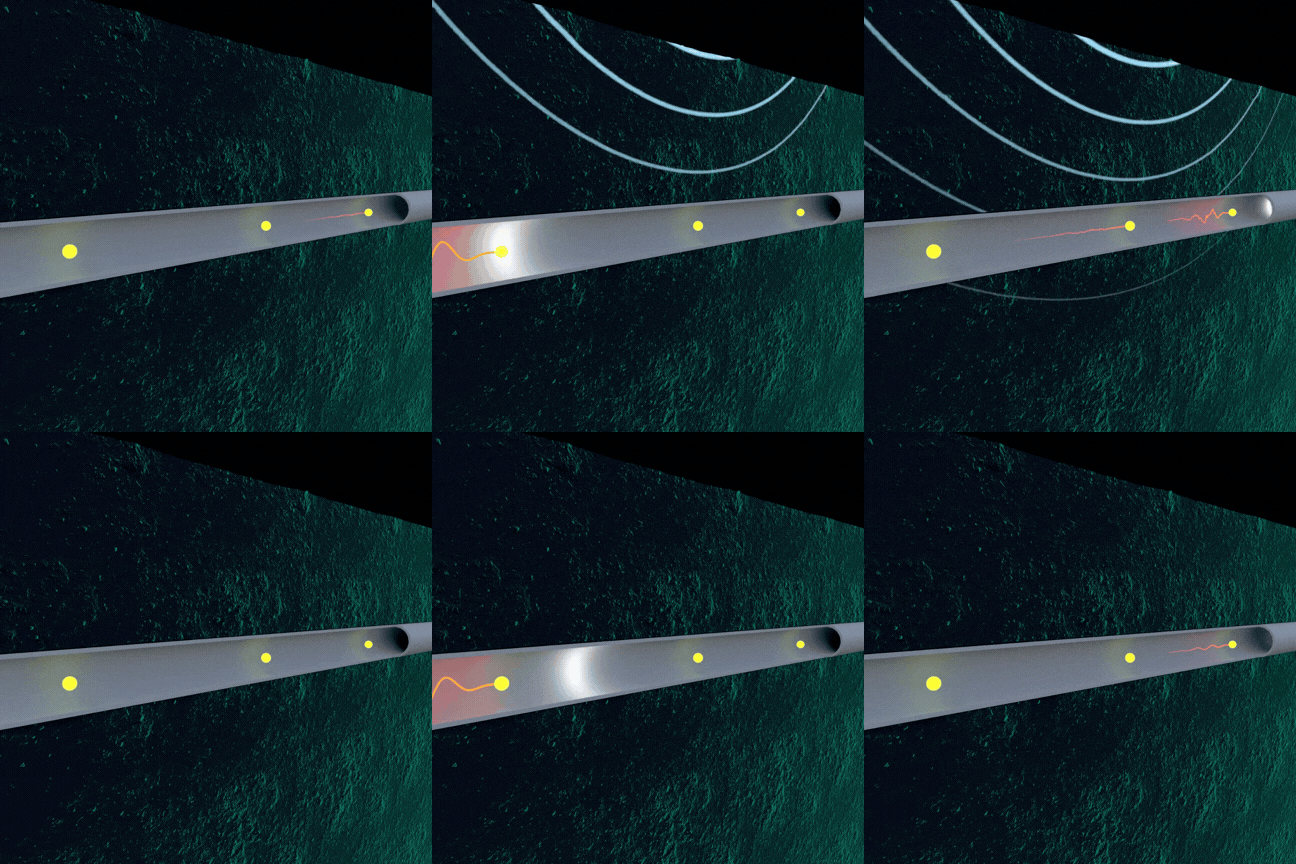
Distributed Sensing: The Power of Linear Scaling
Distributed Acoustic Sensing (DAS) represents a seismic shift in the economic model of railway monitoring. Instead of placing thousands of vulnerable devices along the track, DAS uses a single Interrogator unit to send laser pulses down fiber optic cables already buried trackside.
Every millimetre of that fiber becomes a vibration sensor. Because fiber is often already present as "dark fiber" in telecommunications bundles, transitioning to 100% route coverage doesn't require an astronomical increase in cost, nor the logistical headache of installing hardware on failing embankments or cuttings.
Each interrogator unit can monitor up to 100km of fiber which equates to around 80km of rail route bringing entire route protection within reach.
DAS Economy in Action:
- Gapless Coverage:
DAS provides continuous sensing along the entire length of the cable. There are no "between sensor" failures because the fiber is the sensor. This effectively eliminates the Point Sensor Paradox. - Decluttered and Passive Trackside:
There is no electronic equipment on the trackside. No batteries to change, no solar panels to clean, and no copper for thieves to target. All the "intelligence" sits in a secure signal room, protecting up to 80km of route per unit. - Multipurpose ROI:
The same fiber used for landslide detection can simultaneously monitor for trespass, track condition changes, and electrification flashover faults. This spreads the investment and ROI across Operations, Safety, Maintenance, and Security.
Moving from Patchwork to Network
Recent accidents have proven that "supposedly safe" infrastructure can fail under the stress of extreme weather. Forecasters do not expect these events to decrease; in fact, the consensus points to increased volatility in incoming decades. To remain resilient and relevant, our rail networks must evolve.
We can no longer afford to expand a "patchwork" of point sensors that deliver porous protection. Fiber optic sensing, specifically Sensonic DAS, provides the opportunity to realise gapless route monitoring without busting the budget.
We no longer must choose which slopes to monitor and which to leave to chance. Sensonic DAS makes whole-route protection not just feasible, but prudent.
Speak to our team to find out how we can help you move from patchwork to network protection.